Dental Medicine
Associate of Applied Science in Dental Assisting
A 66-credit, two-year blended program combining online didactic learning, on-campus labs, and 320 hours of supervised clinical externship.
Program Overview
Build Clinical Dental Skills
Prepare for front-office administration, chairside assisting, digital radiography, orthodontics, oral and maxillofacial surgery, preventive functions, and professional board preparation.
The curriculum progresses from dental office software and practice management in Year 1 to advanced specialty practice and two clinical rotations in Year 2.
Admissions
Ready for Clinical Learning
Applicants need a high school diploma or GED with a minimum 2.0 cumulative GPA, plus high school Biology or Chemistry or a passing institutional science placement assessment.
Health Clearance
Complete a criminal background check, 10-panel drug screening, and physical health evaluation.
Immunization Verification
Provide Hepatitis B series and titer proof, MMR, Varicella, Tdap, and annual tuberculosis clearance.
Clinical Preparation
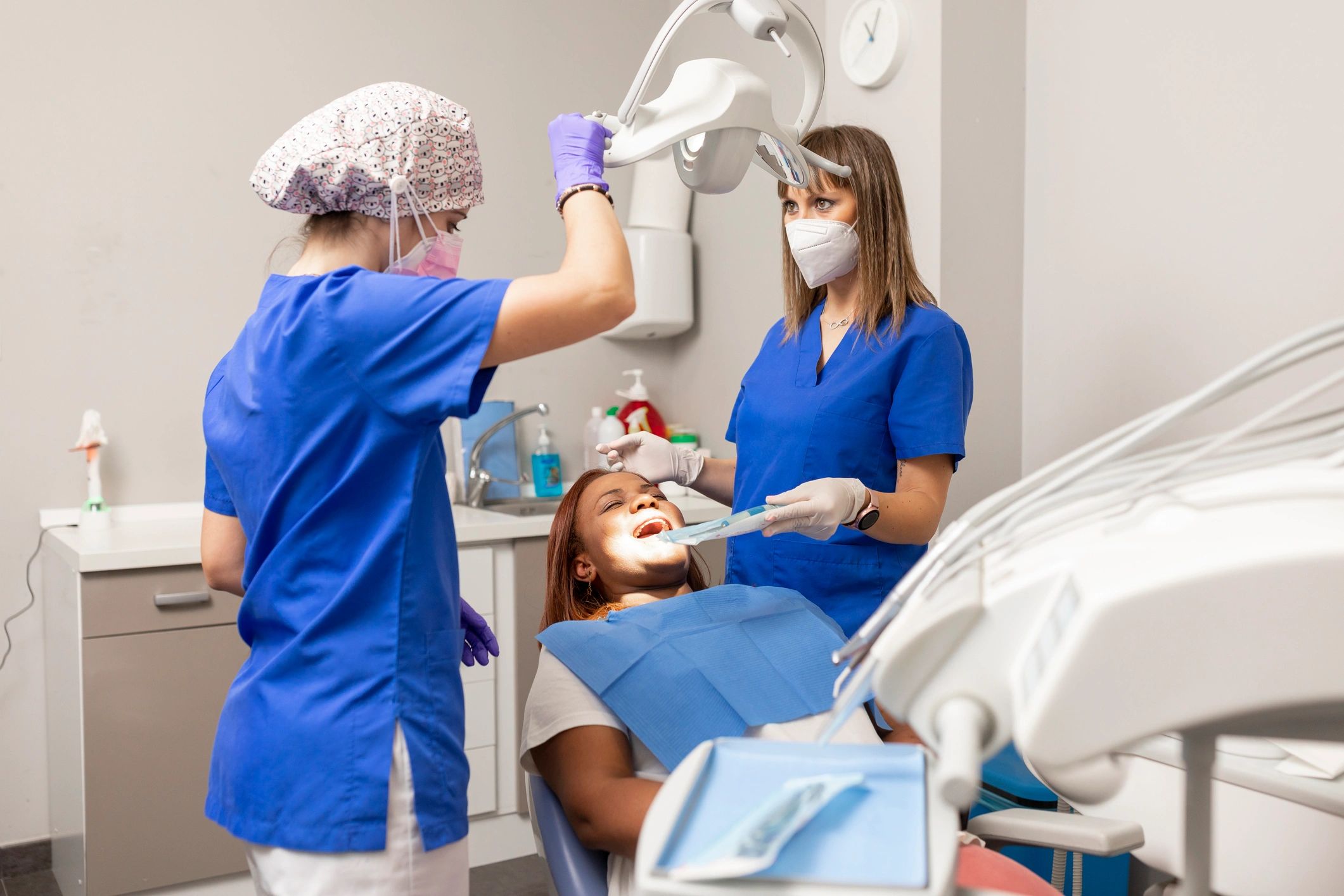
Develop four-handed assisting, infection control, radiography, dental materials, and patient communication skills.
Professional Outcomes
Prepare for DANB RHS, ICE, GC, CDA, RDA, and CPFDA certification pathways.
Learning Outcomes
Skills for Modern Dentistry
Graduates develop the clinical, administrative, and professional capabilities required for contemporary dental practice.
Front Office and EHR
Manage Dentrix software, scheduling, electronic charting, CDT coding, and insurance claims.
Chairside Assisting
Perform four-handed dentistry, instrument transfer, operatory maintenance, ergonomics, and medical asepsis.
Specialty Practice
Assist with orthodontic records and appliances, surgical field setup, sedation monitoring, and post-operative care.
Radiography and Prevention
Produce ALARA-compliant digital imaging and perform preventive functions, including coronal polishing, sealants, and fluoride treatments.
Curriculum
Four-Semester Degree Plan
Year 1, Fall I
15 credits: Composition I, dental anatomy, Dentrix software, dental codes and billing, jurisprudence, ethics, and EHR.
Year 1, Spring I
17 credits: Anatomy and Physiology I, instrumentation, chairside procedures, infection control, radiography, and psychology.
Year 2
29 credits across Fall II and Spring II: orthodontics, oral surgery, materials, preventive functions, pharmacology, board review, and two 160-hour practicums.
Clinical Externship
Learn in Practice
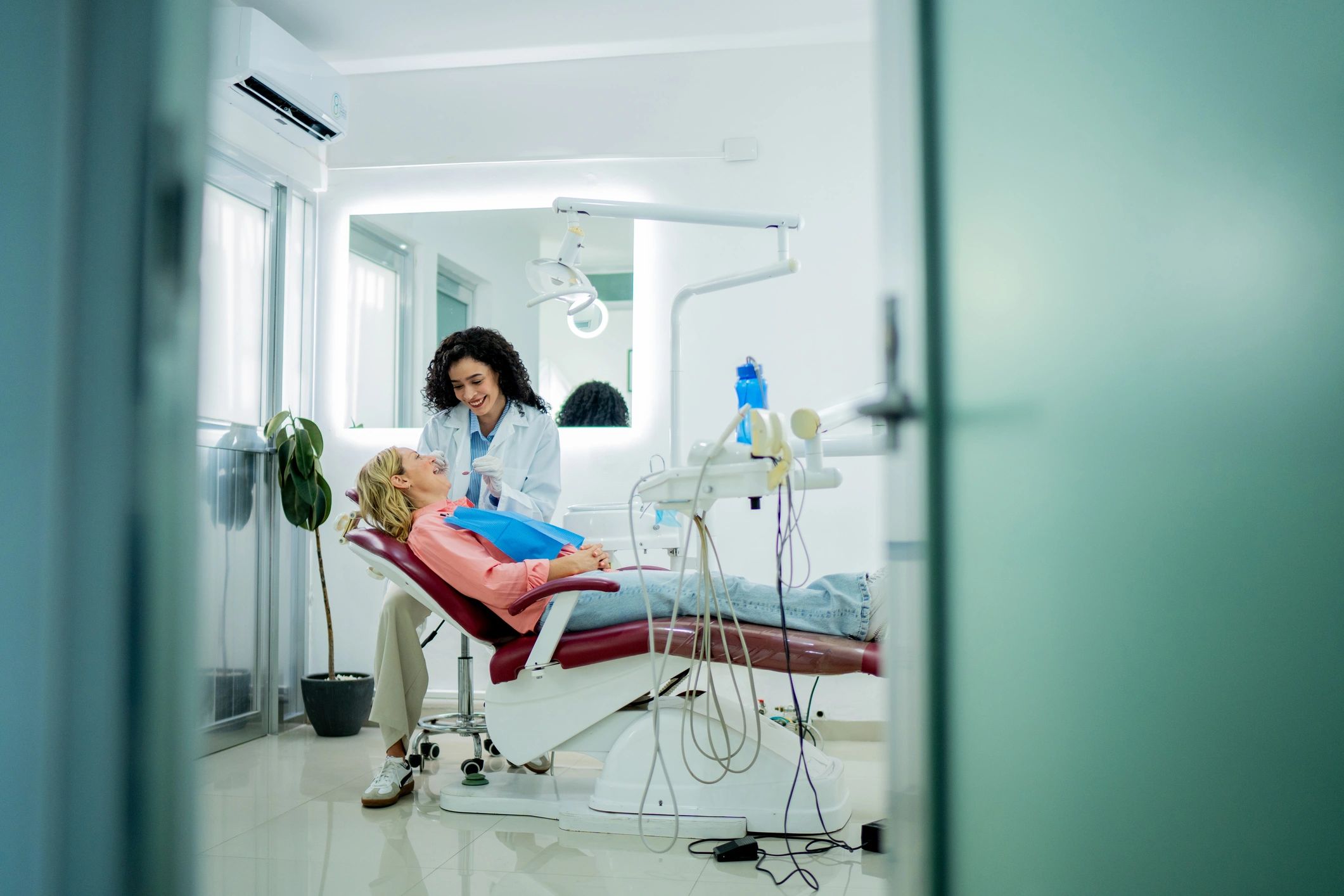
Clinical Dental Assistant Practicum I and II each include 160 supervised hours.
Students complete rotations in general dentistry, specialized dental practices, hospital operating rooms, or community clinics under clinical preceptor evaluation.
Tuition and Aid
Plan Your Investment
Direct Costs
Tuition is $29,700, plus $1,800 program fee, $1,650 lab and consumables fee, and $450 software fee. Total direct costs: $33,600.
Estimated Expenses
Estimated indirect costs are $1,645 to $2,020 for textbooks, uniforms, screening, health requirements, and exam fees. Estimated degree investment: $35,245 to $35,620.
Funding Options
Explore FAFSA, Pell Grants, Direct Loans, Federal Work-Study, interest-free monthly payment plans, WIOA grants, and Veterans’ educational benefits.
Next Step
Start Your Dental Career
Review the complete degree plan, confirm your admissions requirements, and begin your application to the A.A.S. in Dental Assisting.