School of Criminal Justice & Public Safety
Bachelor of Science in Forensics (FORS)
A 120-credit, four-year degree plan combining hard sciences, laboratory analysis, and courtroom-ready forensic practice.
Program at a glance
Science for the pursuit of justice
The B.S. in Forensics prepares students to examine, interpret, and communicate evidence through a rigorous sequence of chemistry, biology, physics, and forensic science coursework.
120 total SCH
42 SCH Texas Core
78 SCH major field
FORS course prefix
Four-year curriculum
Degree plan by year
The curriculum is organized across fall and spring semesters. Credit totals reflect the supplied degree blueprint.
Year 1: Foundations & Hard Sciences
Fall (15 SCH): ENGL 1301 Composition I (3); MATH 2413 Calculus I (4); CHEM 1311/1111 General Chemistry I & Lab (4); CRIJ 1301 Intro to Criminal Justice (3); UNIV 1101 Forensic Sciences Seminar (1).
Spring (16 SCH): ENGL 1302 Composition II (3); HIST 1301 U.S. History I (3); CHEM 1312/1112 General Chemistry II & Lab (4); BIOL 1406 General Biology I & Lab (4); FORS 2101 Forensic Terminology & Safety (2).
Year 2: Chemistry & Crime Scenes
Fall (16 SCH): CHEM 2323/2123 Organic Chemistry I & Lab (4); PHYS 1401 College Physics I & Lab (4); GOVT 2305 Federal Government (3); HIST 1302 U.S. History II (3); FORS 2210 Latent Fingerprint Analysis Lab (2).
Spring (13 SCH): CHEM 2325/2125 Organic Chemistry II & Lab (4); PHYS 1402 College Physics II & Lab (4); GOVT 2306 Texas Government (3); PSYC 2301 General Psychology (3); PHIL 2306 Forensic Bioethics & Expert Testimony (2).
Year 3: Analysis & Trace Evidence
Fall (15 SCH): FORS 3310 Forensic Serology & DNA Profiling (3); FORS 3320 Bloodstain Pattern Analysis Mechanics (3); FORS 3330 Forensic Chemistry & Drug Analysis (3); MATH 3339 Forensic Biostatistics & Probability (3); HUMA 1301 Creative Arts Core (3).
Spring (15 SCH): FORS 3340 Firearms, Toolmarks, & Ballistics Analysis (3); FORS 3350 Forensic Toxicology & Mass Spectrometry (3); FORS 3360 Crime Scene Photography & 3D Scanning (3); BIOC 4301 Biochemistry for Forensics (3); FORS 3205 Advanced Instrumentation Lab (2).
Year 4: Specialties & Practicum
Fall (14 SCH): FORS 4310 Forensic Pathology & Medicolegal Death (3); FORS 4320 Digital Forensics & Mobile Extraction (3); FORS 4330 Forensic Anthropology & Skeletal Analysis (3); FORS 4340 Trace Evidence & Microscopy Analysis (3); FORS 4250 Mock Courtroom & Expert Witness Lab (2).
Spring (16 SCH): FORS 4401 Crime Laboratory Clinical Rotation (4); FORS 4350 Arson & Explosives Investigation Chemistry (3); FORS 4360 Quality Assurance & Crime Lab Management (3); FORS 4690 Senior Capstone: Complex Evidence Review (6).
Practical learning
Primary skill focus
Evidence Development
Latent fingerprint development, DNA extraction and STR profiling, and bloodstain pattern reconstruction.
Laboratory Analysis
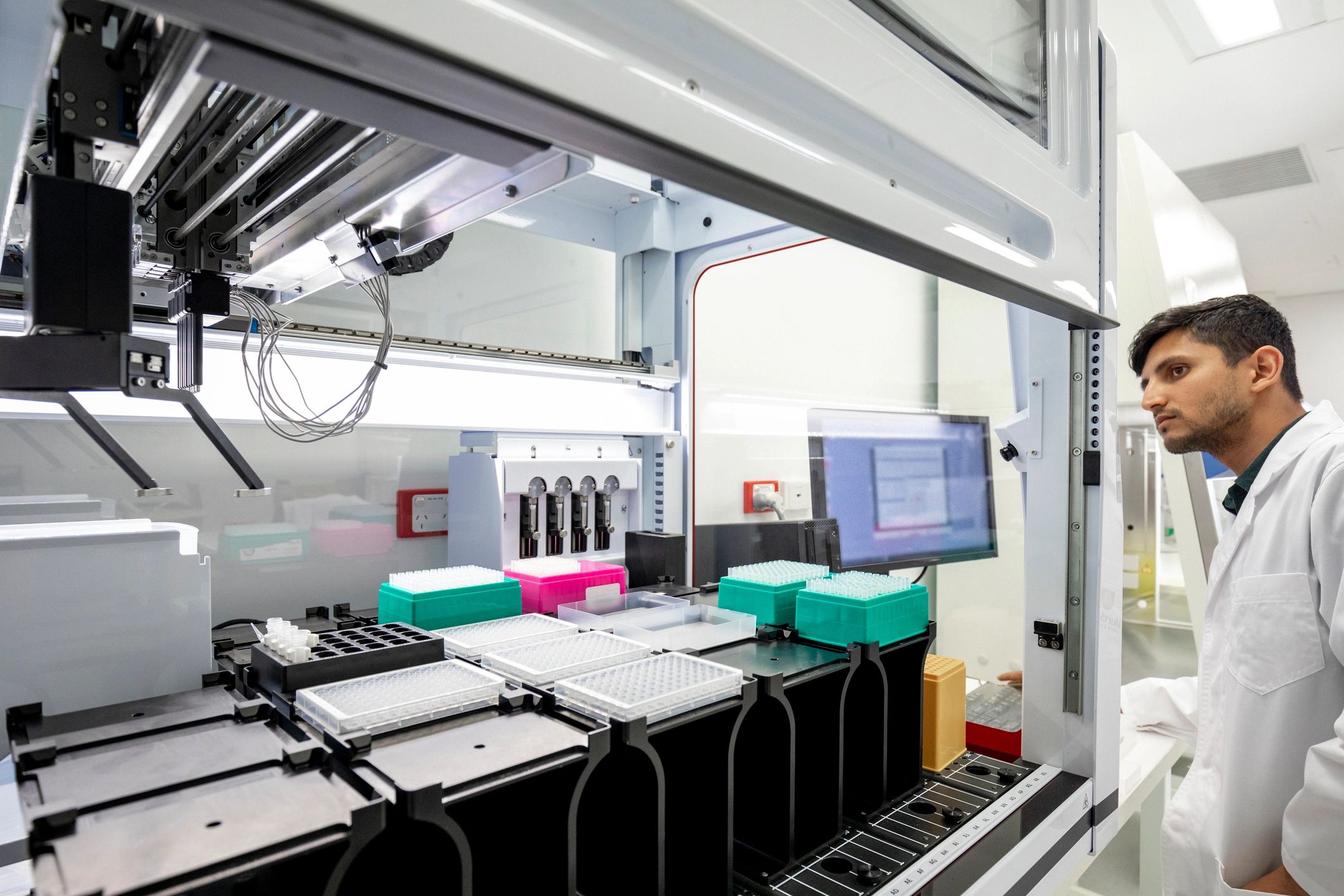
Ballistic comparison microscopy, GC-MS toxicology, and crime scene 3D laser mapping.
Expert Communication
Mock courtroom practice and expert witness testimony grounded in ethical forensic methods.