Departments
Medicine Department
Explore Bachelor of Science programs across primary care, surgery, diagnostics, and specialized medical disciplines.
Academic Pathways
Study Medicine
The Medicine Department offers a broad, organized catalog of Bachelor of Science programs spanning patient care, surgical practice, diagnostics, and preventive fields.
Programs are presented by specialty area to help students identify an academic pathway aligned with their interests and goals.

Programs
Primary Care & General Practice
Bachelor of Science in Family Medicine
Primary care across the lifespan.
Bachelor of Science in Internal Medicine
Adult health and complex care.
Bachelor of Science in Pediatrics
Health care for infants, children, and adolescents.
Bachelor of Science in General Surgery
Foundational operative care and surgical practice.
Bachelor of Science in Orthopedic Surgery
Musculoskeletal and orthopedic care.
Bachelor of Science in Neurosurgery
Surgical care of the brain, spine, and nervous system.
Programs
Surgical Specialties
Bachelor of Science in Cardiothoracic Surgery
Surgical care of the heart, lungs, and chest.
Bachelor of Science in Plastic and Reconstructive Surgery
Reconstructive and restorative surgical care.
Bachelor of Science in Urology
Urinary tract and male reproductive health.
Bachelor of Science in Cardiology
Heart and cardiovascular health.
Bachelor of Science in Gastroenterology
Digestive system and gastrointestinal health.
Bachelor of Science in Endocrinology
Hormonal and metabolic health.
Programs
Internal Medicine Subspecialties
Bachelor of Science in Nephrology
Kidney health and renal care.
Bachelor of Science in Pulmonology
Respiratory and lung health.
Bachelor of Science in Oncology
Cancer care and treatment science.
Bachelor of Science in Hematology
Blood disorders and hematologic health.
Bachelor of Science in Rheumatology
Autoimmune and musculoskeletal inflammatory conditions.
Bachelor of Science in Infectious Diseases
Prevention and management of infectious illness.
Programs
Internal Medicine & Specialized Disciplines
Bachelor of Science in Allergy and Immunology
Allergic, immune, and hypersensitivity conditions.
Bachelor of Science in Obstetrics and Gynecology (OB/GYN)
Reproductive, maternal, and gynecologic health.
Bachelor of Science in Neurology
Brain, spinal cord, and nervous system care.
Bachelor of Science in Dermatology
Skin, hair, and nail health.
Bachelor of Science in Ophthalmology
Eye health and vision care.
Bachelor of Science in Otolaryngology (ENT)
Ear, nose, throat, and related head and neck care.
Programs
Specialized & Diagnostic Fields
Bachelor of Science in Psychiatry
Mental health assessment and care.
Bachelor of Science in Emergency Medicine
Acute and urgent patient care.
Bachelor of Science in Anesthesiology
Perioperative care, anesthesia, and pain management.
Bachelor of Science in Radiology
Medical imaging and diagnostic interpretation.
Bachelor of Science in Pathology
Laboratory medicine and disease diagnosis.
Bachelor of Science in Physical Medicine and Rehabilitation (PM&R)
Function, recovery, and rehabilitation care.
Programs
Physical Medicine & Preventive Fields
Bachelor of Science in Preventive and Occupational Medicine
Population health, prevention, and workplace medicine.
Explore Admissions
Learn how to begin your University Of Justice application.
View Degree Programs
Explore additional academic departments and pathways.
Required Pre-Medical Curriculum
The following curriculum is required for all Bachelor of Science in Pre-Medical Sciences degrees.
Year 1 Foundations of Science
Semester 1
- General Chemistry I (+ Lab)
- Introductory Biology I (+ Lab)
- First-Year Writing I
- Intro to Medical Justice
Semester 2
- General Chemistry II (+ Lab)
- Introductory Biology II (+ Lab)
- First-Year Writing II
- Elementary Statistical Methods
Year 2 Organic & Cellular Systems
Semester 3
- Organic Chemistry I (+ Lab)
- Genetics (+ Lab)
- Introduction to Computer Science
- English Literature
Semester 4
- Organic Chemistry II (+ Lab)
- Human Anatomy & Physiology I (+ Lab)
- General Psychology
- Medical Business
Year 3 Physics & Advanced Core (Select a Focus)
Semester 5
- General Physics I (+ Lab)
- Biochemistry
- Human Anatomy & Physiology II (+ Lab)
- Focus Elective I
Semester 6
- General Physics II (+ Lab)
- Medical Physiology
- Introduction to Sociology
- Focus Elective II
Year 4 Clinical Integration & Capstone
Semester 7
- Molecular Biology
- Introduction to Clinical Lab Science
- Focus Elective III
- Health Care Policy
Semester 8
- Pre-Med Capstone & Clinical Simulation
- Professional Internship/Practicum
- Public Speaking & Medical Advocacy
Begin Your Medicine Path
Take the next step toward a Bachelor of Science program in the Medicine Department.
Learning in Medicine
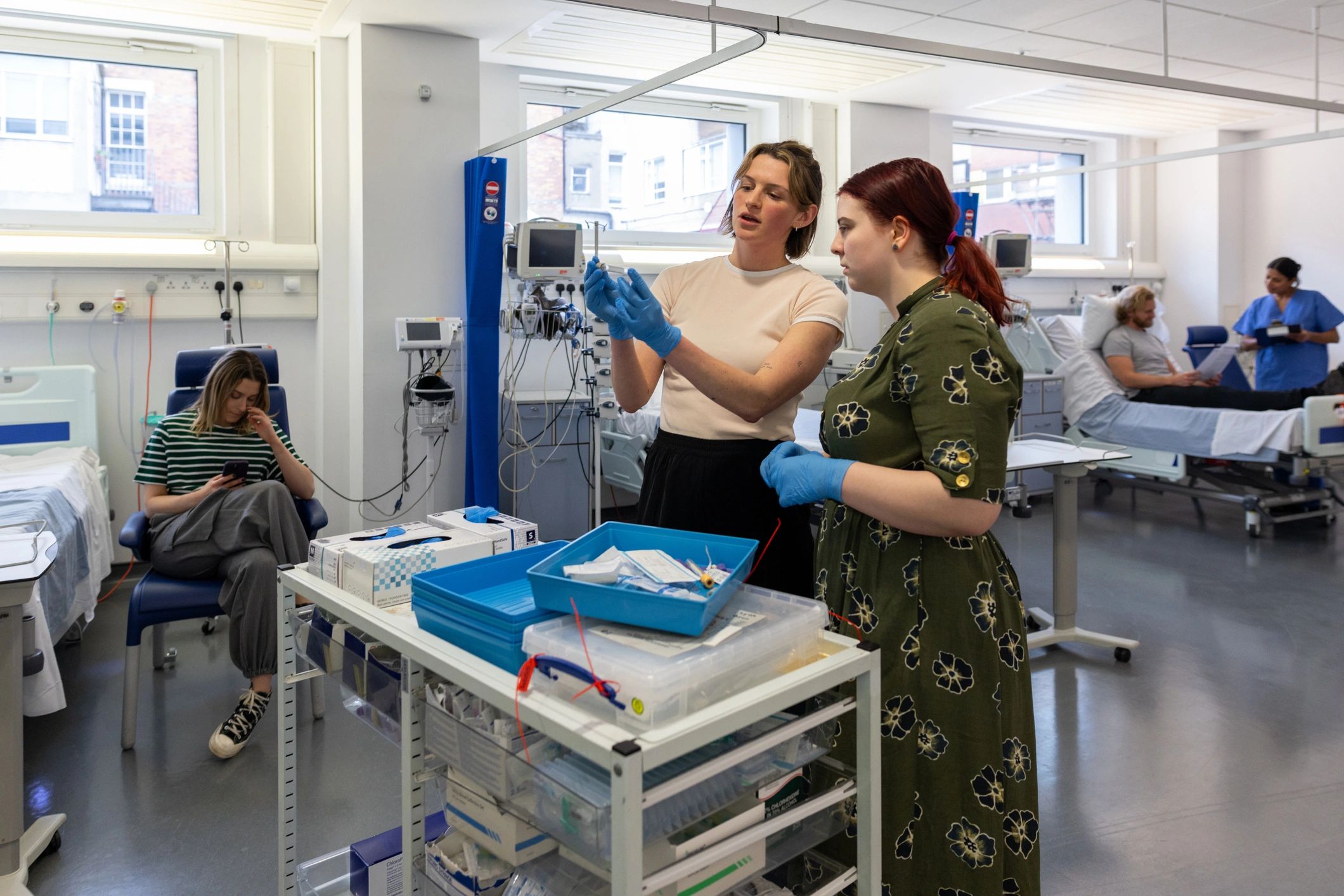
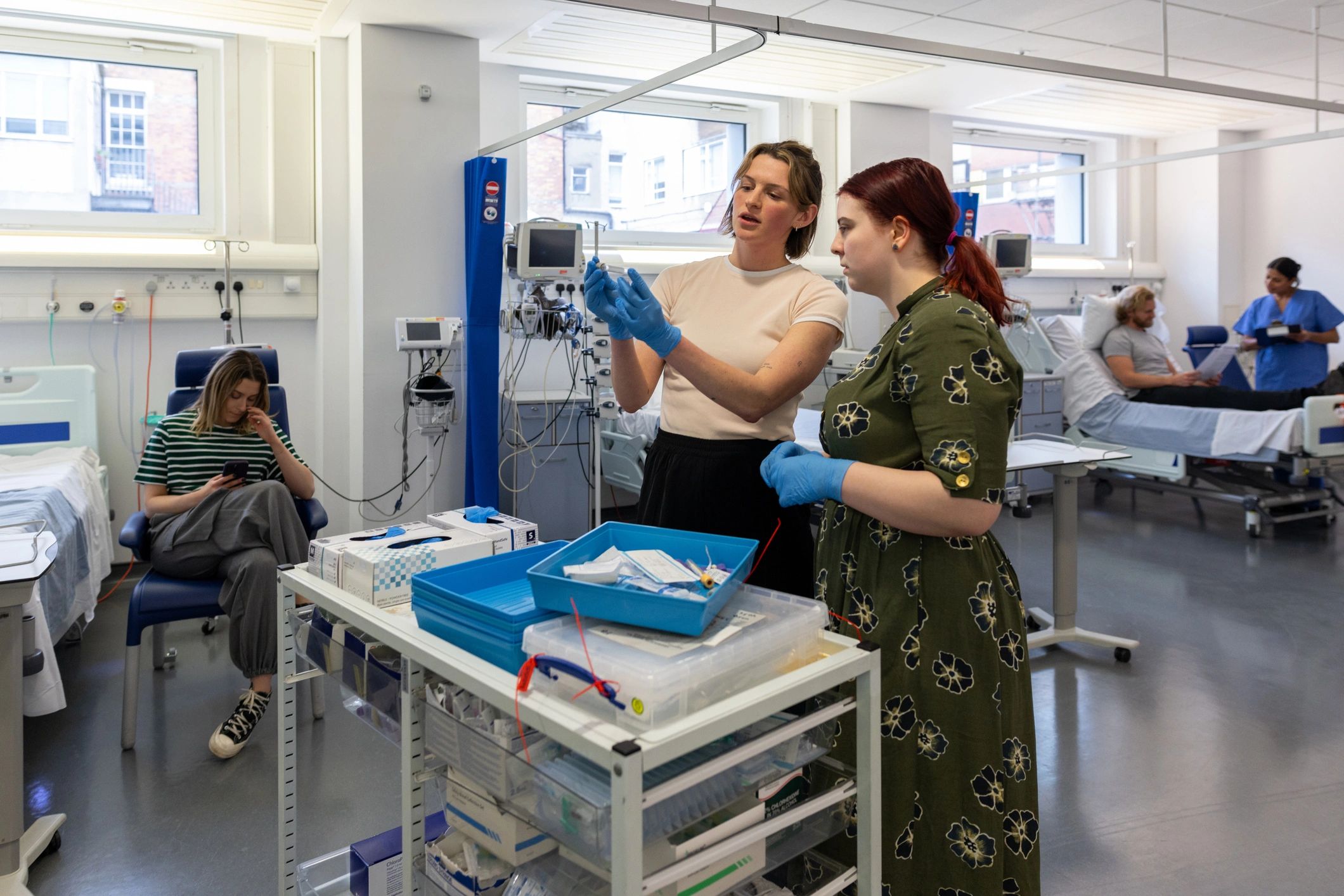
Explore the collaborative spaces where Medicine Department students build knowledge, practice clinical skills, and prepare for meaningful careers in healthcare.
Clinical Training
Hands-on learning in patient-centered clinical environments.

Medical Laboratory Learning
Collaborative investigation with modern laboratory tools.

Our Future Physicians
A diverse community of students ready to lead with care.

Clinical Training
Faculty-guided practice that connects learning to care.

Medical Laboratory Learning
Careful observation, research, and evidence-based discovery.

Our Future Physicians
Confident learners building the future of medicine.
Medicine / BioMedical Admissions
Prepare a complete application for USJ Medicine / BioMedical programs. Review the general requirements, department expectations, and priority deadlines before you apply.
General Admission
Required Documents
Submit all required materials for review: completed USJ application; official high school transcript or GED; official transcripts from every college or university attended; government-issued photo identification; proof of legal name; current résumé or curriculum vitae; personal statement; two letters of recommendation; proof of English proficiency when applicable; and any program-specific materials requested by USJ.
Department Focus
Ethical and Practical Alignment
Medicine / BioMedical applicants should demonstrate readiness for rigorous scientific study, patient-centered care, ethical decision-making, professional communication, and practical learning in clinical and laboratory environments.

Priority Dates
Plan Your Application
Fall Priority begins February 1 and closes November 15. Spring Priority begins August 15 and closes January 7. Submit early to allow time for document review and follow-up.
Ready for Medicine / BioMedical?
Begin your USJ application with a complete document set and a clear plan for your intended term.
Priority review is available for complete applications submitted by the published deadlines.